Client dossier

- CLIENT
- Skydio
- SECTOR
- autonomous drone technology
- DATE
- since 2022
- OUTCOME
- the same aircraft, built at a scale that fits a bag and a scale that fills a bench
Skydio builds autonomous drones. It asked for a small, physical version of one, and has been coming back for larger ones ever since.
A drone company's product lives in the air. It is a thing you watch from below, or read about in a flight log, and there is nothing to set on a table, hand to a candidate at a careers fair, or leave behind in a room after the meeting ends. The company's whole argument is a machine that by definition is not where the conversation is happening.
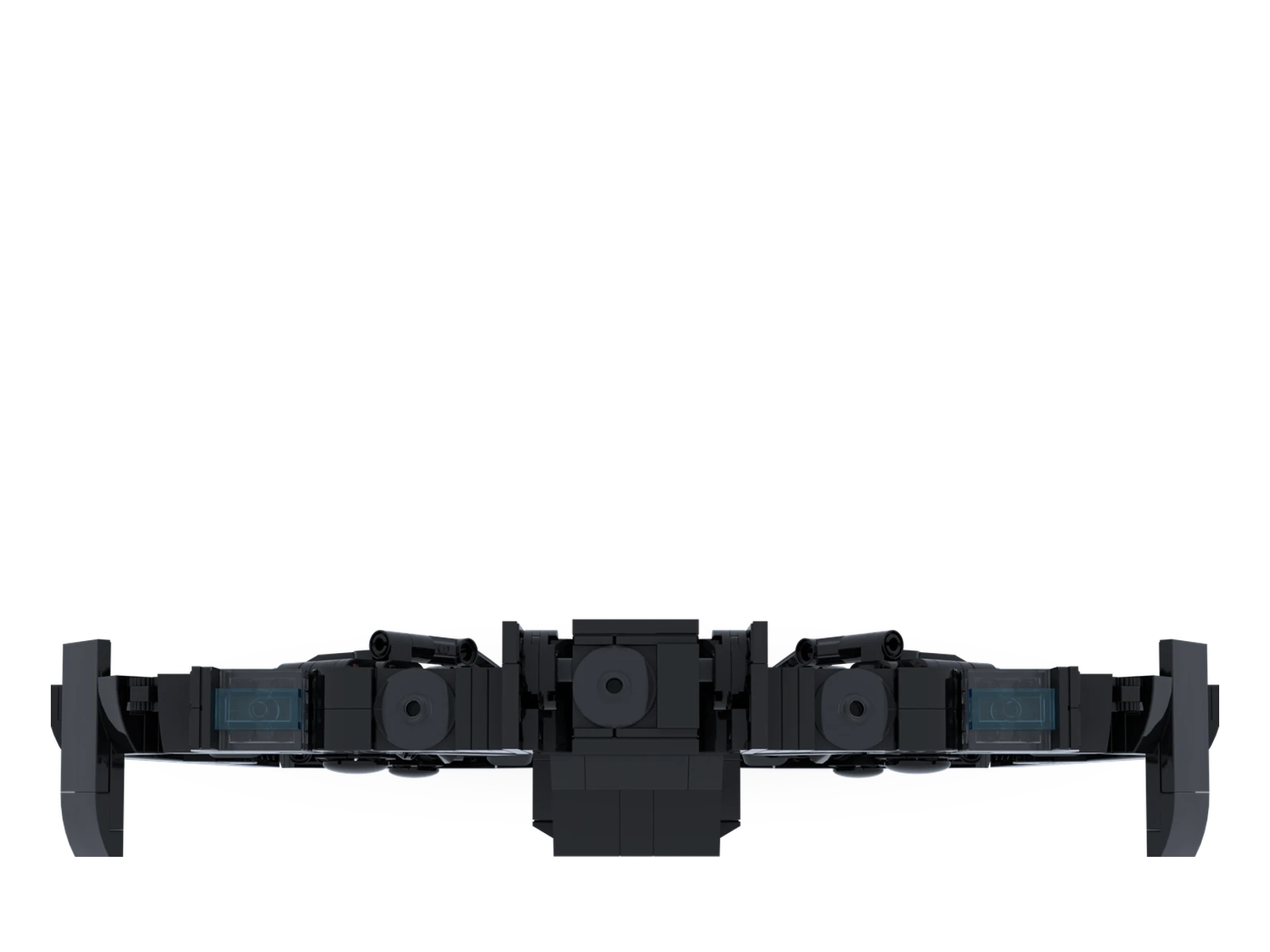
It started with a kit small enough to sit on a desk: the drone, its dock, and a minifigure operator holding a controller. Skydio came back for the same thing, came back again on a much larger scale, and has kept coming back since. The order worth understanding bought the same aircraft at scales that have almost nothing in common: the F10, small enough to drop in a conference bag and shipped in Skydio's own packaging, and the R10 at life size, with ducted rotors inside a moulded guard, a camera gimbal and running lights. Those are not the same design resized. At the small scale the work is deciding which few features carry the identity, because everything else has to go and the thing must still be unmistakably that aircraft. At life size there is nowhere to hide: every proportion is checkable against the real machine standing next to it, and anything approximated reads as wrong from across the room. Skydio's own product team proved that. They reviewed the design and came back with an observation: on the real aircraft the rotors alternate, turning clockwise and counter-clockwise, and ours were all pitched the same way. The studio's own answer, given honestly rather than confidently, was that this might be the only propeller part that exists at that size. The team went back anyway and found a way. The alternating pitch went into the design, the running lights at the front were changed to blue to match the small kit, and none of it moved the price that had already been agreed. The box the kits shipped in was the client's own choice to make: asked whether they wanted the studio to design the graphics from their brand guidelines or to do it themselves, Skydio's creative team built the artwork off the studio's renders.
the same aircraft, built at a scale that fits a bag and a scale that fills a bench
The kits go where the drone cannot. In the client's own account they are used for recruiting events, giveaways and promotions, which is to say the rooms where a company has to be interesting to people who have not bought anything yet. But the best thing this account has produced was not asked for and was not designed. Skydio came back with a request: could they have a version of the building instructions with the operator and the controller taken out, leaving just the aircraft, because their team wanted to turn it into a poster for the office wall. Read that again. The deliverable was a kit. The instructions were the paperwork that came with it, the thing every other client throws away. The client asked to frame the paperwork. What they wanted on the wall was not the drone and not even the model of the drone, but the evidence that someone had worked out how to build one.
Specific to this one
The same aircraft, seventeen times apart
Forty-one pieces and seven hundred and ten, bought on one purchase order. The small one is an exercise in what to leave out; the large one is an exercise in having nothing left to leave out.
Next step
Start the conversation.
This dossier ends the same way every one on this site does: a short call, or a short form. Neither commits you to anything until you say so.