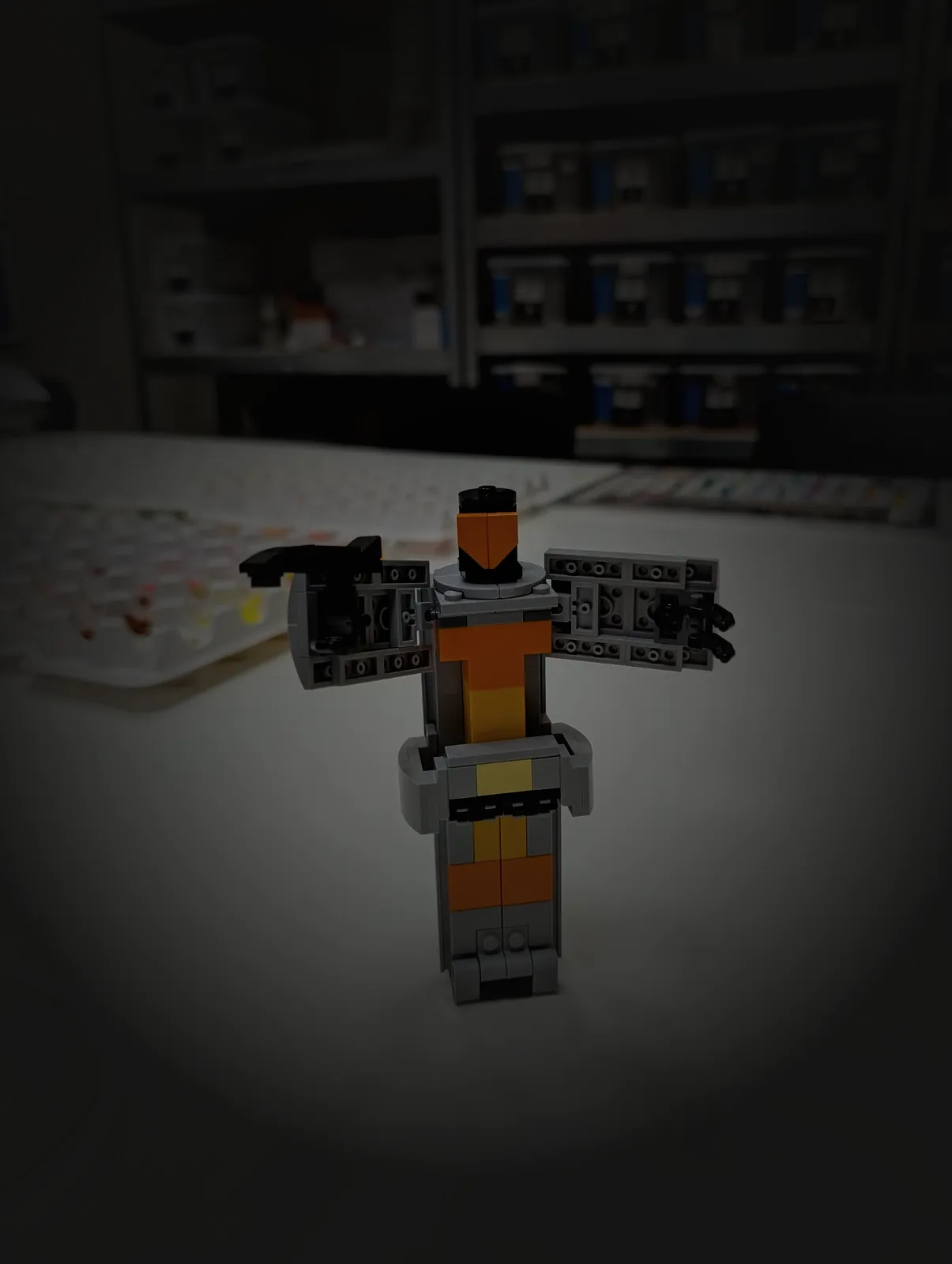
The prototype is a real object, not a render
July 16, 2026
The story
Most of a custom build can be argued about on a screen. Proportions, colours, which brand elements survive the translation into brick: all of that can be sketched, rendered, and revised cheaply, and it should be, because that is the stage where changing your mind costs nothing.
Then the design leaves the screen. The studio builds one prototype by hand, in brick, and the client reviews that physical piece before anything is produced at scale. It is the third of the six stages, and it is the only one that is a gate rather than a step: production does not start until the prototype has been seen and signed off.
That gate exists because a render is generous and a real object is not. On screen, a logo reads at any size. In brick, it either resolves at the scale you have or it does not. A colour that looks right in a rendering can turn out to exist in three parts and not the one the design needs. A shape can be structurally fine in software and fragile in the hand of someone unpacking it at an event. None of those are design failures; they are the ordinary friction between a picture of a thing and the thing. They are cheap to fix once, on a single prototype, and expensive to discover across a whole production run.
It also changes the conversation. Approving a render is an act of imagination, and people approve renders they have not really pictured. Approving an object you are holding is not. Clients who were quietly unsure say so at that point, which is exactly when you want to hear it, and the ones who are happy are happy about something specific rather than something promised.
The practical consequence for a buyer is worth stating plainly: nothing is built in quantity that you have not already held. If the prototype is wrong, it is wrong once.